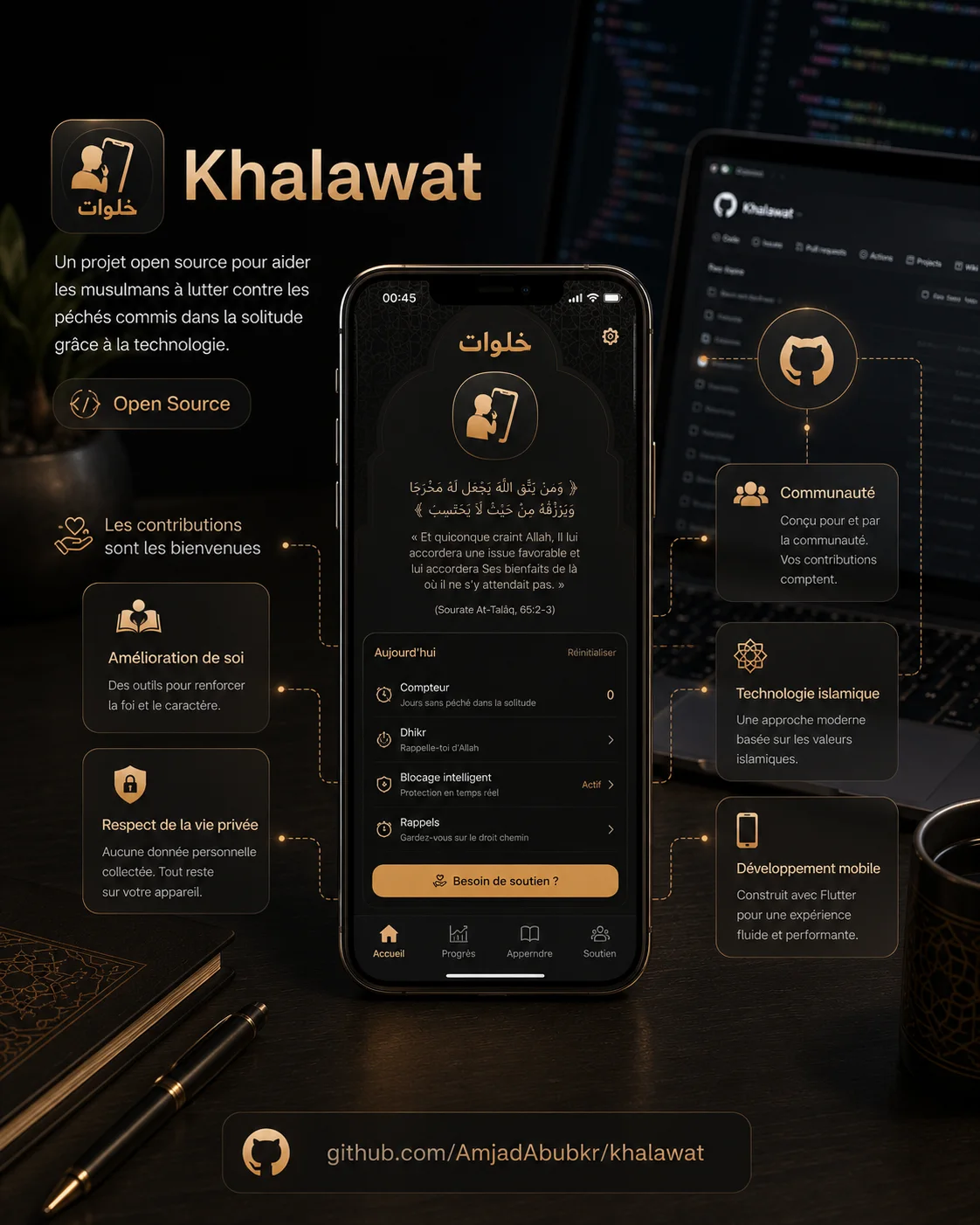
The problem
People trying to change private digital habits often face tools built for monitoring or punishment. Khalawat explores a different model: protection installed voluntarily, operating locally, and designed around the short window in which an interruption can help.
The response
I built an Android MVP that uses a local VPN and DNS interception to redirect blocked requests into staged spiritual interventions, while keeping browsing data on the device and avoiding remote reporting.
Decisions that shaped the product
- 01
DNS-only tunnel
The VPN handles only DNS traffic. Clean queries use the device's resolver, limiting scope and avoiding unnecessary visibility into browsing traffic.
- 02
Friction that escalates carefully
A deterministic state machine moves from a pause to active deflection and a longer lock, creating time without turning the experience into punishment.
- 03
Local privacy as a product promise
Blocklists, spiritual content, intervention pages, state, and protected settings live locally. Sensitive PIN material uses Android Keystore protection.
Implemented evidence
- Kotlin and Jetpack Compose application around Android VpnService and a testable DNS coordination core.
- Packet parsing, blocklist matching, resolver fallback, forwarding retries, and loopback-only interventions.
- Offline multilingual spiritual content and persistent escalation behavior.
- Automated unit tests, Android lint verification, and a successful release build in the latest hardening cycle.
- Code For Chad publicly featured Khalawat as an open-source project developed by Amdjad Aboubakar and invited contributors.
Current limits
- Khalawat is an in-development Android MVP, not a publicly distributed protection service.
- DNS filtering cannot guarantee that every harmful resource or bypass technique is blocked.
- No behavioral outcome or effectiveness claim is made without real-world evidence.
Privacy is not only encryption or storage. It is deciding how little a product needs to know, and refusing features that would break the trust behind voluntary use.